Screaming Hairy Armadillos
The hairiest armadillo of them all, and the loudest
About Our Screaming Hairy Armadillos
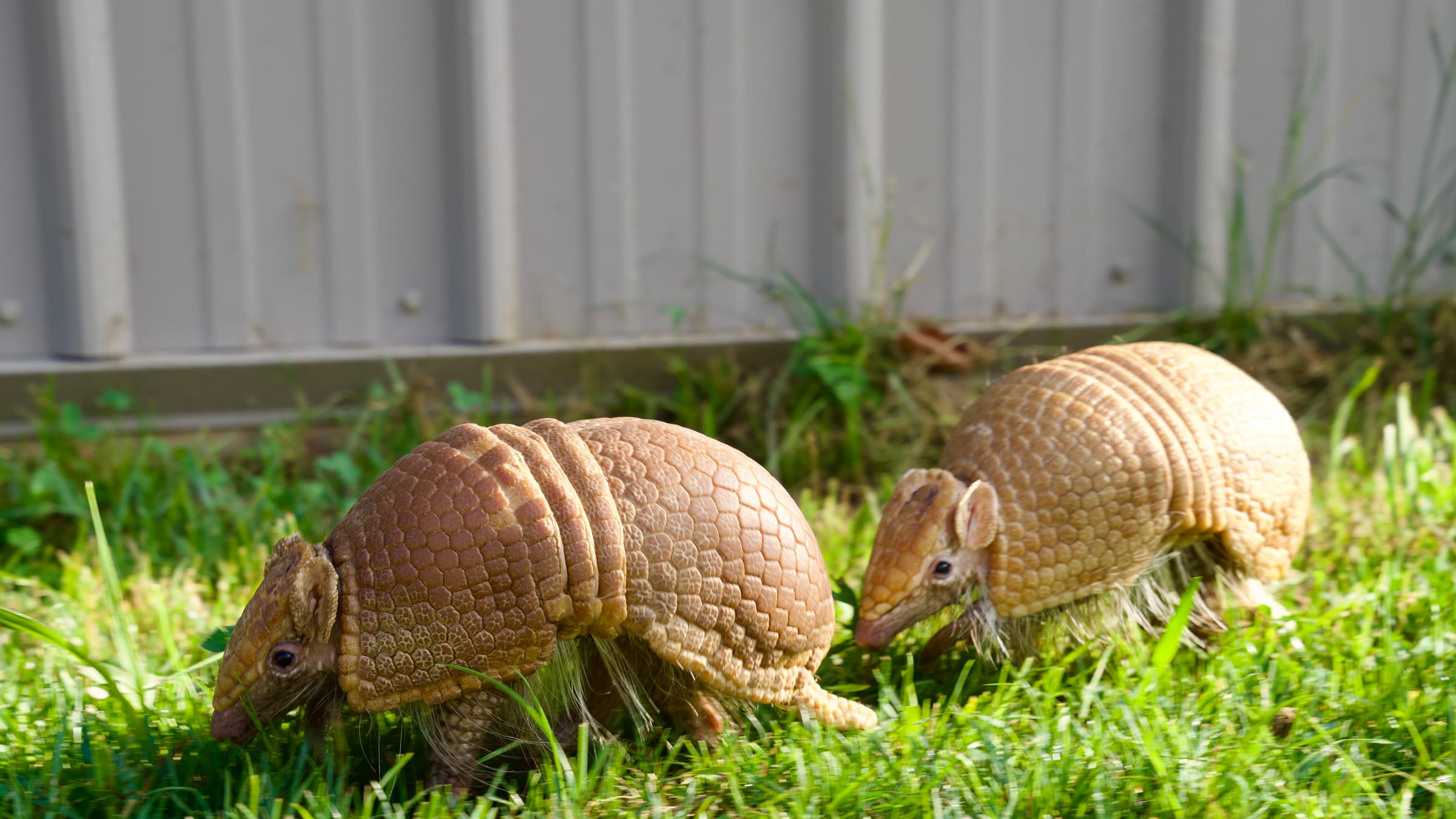
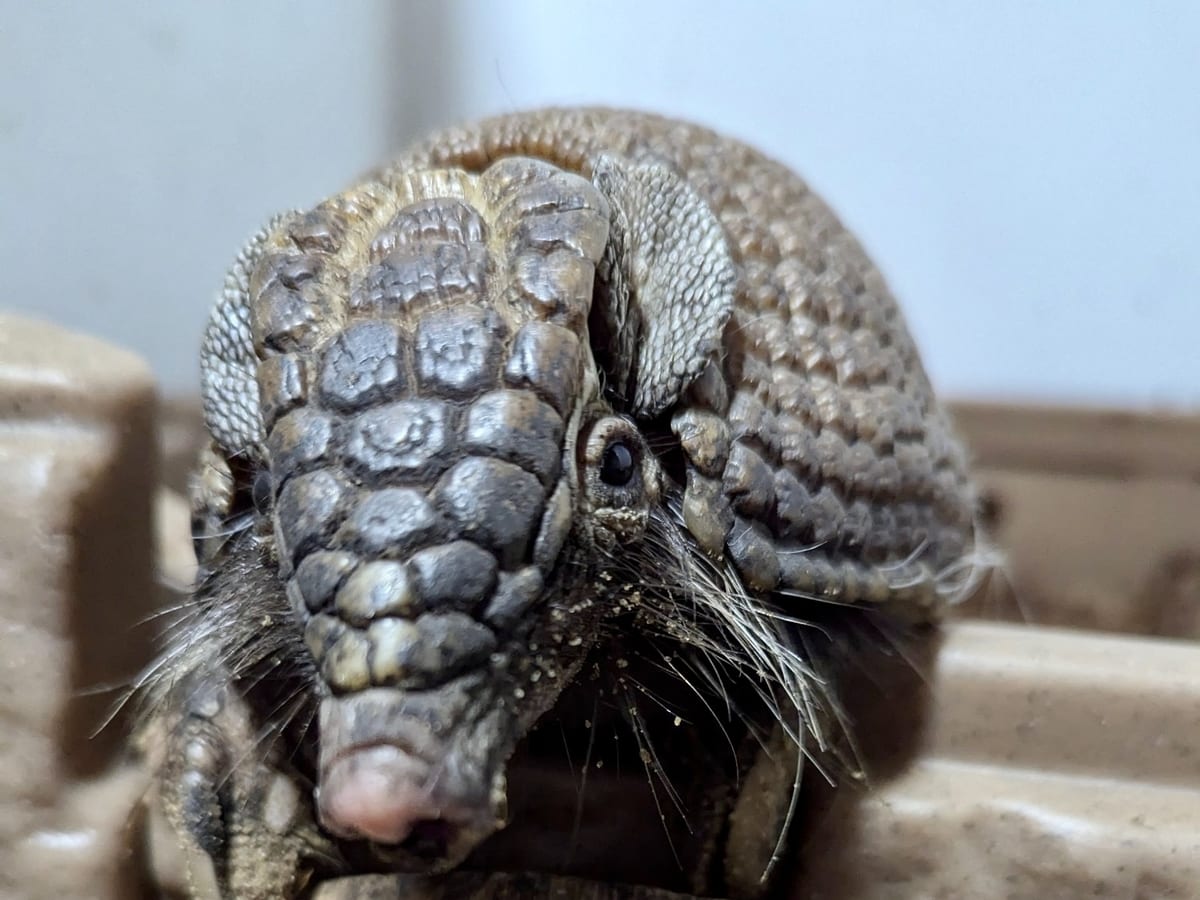
Our screaming hairy armadillos (Chaetophractus vellerosus) are a completely different species from our three-banded armadillos, and they are easy to tell apart once you know what to look for: a darker, bristled shell, a longer pointed snout, and coarse hair growing right through the armor.
They get their name from the loud, squealing call they make when they feel threatened. Because they cannot curl into a protective ball the way our three-banded armadillos can, that squeal and a very fast exit underground are their defense instead.
Native to the dry scrubland of Argentina, Bolivia and Paraguay, they are powerful diggers built low to the ground, with heavy front claws that can move soil far faster than you would expect from an animal wearing armour.
Where to Meet Them
Our screaming hairy armadillos are part of the Ambassador Animals Experience, our guided encounter through the Ambassador Building, and they may also appear if you choose Armadillos Up Close on Pick Your Ambassador.
They are not part of the Self-Guided Farm Tour. To guarantee meeting them during your visit, the appropriate Private Encounter must be booked separately. Interaction is always staff-guided, with feeding or enrichment opportunities when appropriate.
Screaming Hairy Armadillo Facts
They really do scream
When they feel threatened they let out a loud, squealing call. It is where the name comes from, and it is startling the first time you hear it.
The hairiest armadillo
Coarse bristles grow between and through the plates of their shell, far more hair than any other armadillo species carries.
They cannot roll into a ball
That trick belongs to our three-banded armadillos. A screaming hairy armadillo escapes by digging instead, and can bury itself in loose soil in seconds.
Desert water savers
They can go long stretches without drinking, taking most of the moisture they need from the insects and plants they eat.
Shift workers
They forage at night through the hot months and switch to daytime in winter, following whichever temperature suits them best.
Dry scrubland natives
In the wild they live across the dry scrub and grassland of Argentina, Bolivia and Paraguay.
Photo Gallery
Meet Them Up Close
Our screaming hairy armadillos are one of six species you meet inside the Ambassador Building.